Step one

“Oh, come on! Come with us―it’ll be fun,” Lena prodded.  She looked in the mirror and smacked her crimson lips together, then pushed them into a pout.  I looked away, scanning the room for any distraction.  At last I caught sight of my binder, full of lesson plans.

“I’m sorry, but I really shouldn’t,” I replied waveringly. “I have…too many lesson plans to prepare.  For my lessons. That aren’t…done yet.”  I trailed off, and began to flip through my binder.  I could feel Lana watching me, but she didn’t say a word.  Then, she stood up and as she left the room, called back,

“Suit yourself―though it really would have been fun!”

Sadly, this was not the only occasion that I turned down an opportunity to socialize in Prague.  The reason, simply enough: fear.  The thought of going to dinner with an entire crowd of Czechs, whose words would dart around my head like hummingbirds, sent chills down my spine.  Even going to the store was foreboding, as I was still traumatized by the cashier’s scolding for not having correct change.  I hardly ever used change in America! Who ever counted pennies to pay?  Soon, my fear of making a mistake felt like paralysis.  Until I  began to embrace the fear I felt at new experiences, I could not take one step forward.

Image (C) Getty, 2013.

In retrospect, I realize that I could have overcome this fear.  I would have continued to encounter nerve-wracking situations in my new home, but at least  I could have  reacted to them differently.  If you find yourself in a similar situation, try these steps, to start:

  • Write down three situations that are intimidating or frightening to you (perhaps building off of my own examples)
  • Pick one of these situations and try it again.  Go back to the coffee shop and speak to the barista, or return to class and talk to the student sitting next to you.  Force yourself to follow through!
  • Worried about making that famous American small-talk?  Remember these conversation openers:
    • “What great/awful weather today, huh?”
    • “Did you do/like/dislike the reading we had to do?” (for students)
    • “Did you hear about…?” (refer to a recent event most will have knowledge about)
    • “Do you know____________?” (make a connection with a mutual acquaintance)
    • “Do you always get the same drink?” (coffee shop introduction)
    • “I like your t-shirt/sweater/shoes, etc.  Where did you get them?” (generally for women)

Of course, you can always begin with:

“Hi, how are you doing?”

Image (C) Getty, 2013.

Any more ideas on how to get the conversation started? Share them here!
In the news: Oscar De La Renta

On October 20th, 2014, fashion designer and style icon Oscar De La Renta passed away.  In honor of his legacy, National Public Radio interviewed Washington Post fashion critic Robin Givhan. After listening to the radio program, answer the questions below:

Oscar De La Renta Was About Making Women Look And Feel Their Best 

  • Givhan tells NPR’s Steve Inskeep that ultimately, women “want to feel pretty”.  Do you agree with this statement?

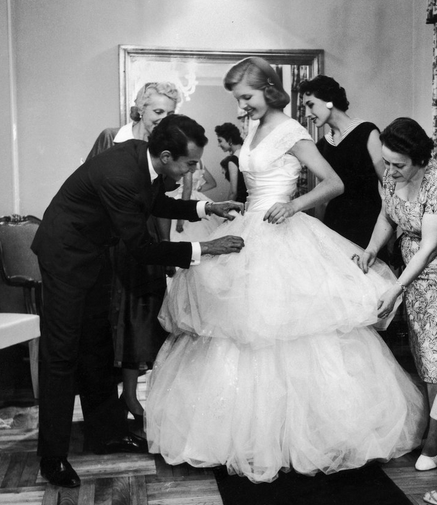
    Beatrice Lodge is fitted in a debutante dress by fashion designer Oscar de la Renta in 1956.
    Beatrice Lodge is fitted in a debutante dress by fashion designer Oscar de la Renta in 1956.
  • Inskeep states that De La Renta’s early years seem  “so far from the world of music stars and first ladies and high fashion” and that “he seems to have come a long way”.  Can you think of any other well-known people who came from very different backgrounds? 
  • Givhan says that “one of the magical things about him…that you don’t really see anymore”was his charm and sense of propriety.  For example, in their last interview “(De La Renta) apologized because he had taken off his tie.  I mean, who does that?!”  Do you think this attitude set De La Renta apart from others in the business?  Is it an attitude that is largely nonexistent these days?
  • Look at a few of the fashion designs from De La Renta.  Do you like the style? Why or why not?


Are you superstitious?

A superstitious person believes in stories or traditions that have no explanation.  Here are a few common superstitions you’ll hear in English:

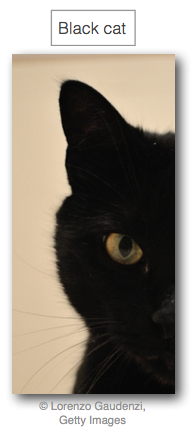
  • knock on wood (by knocking on wood, you prevent something bad from happening when you’ve just mentioned "Black cat"something good)

“So far I’ve done really well on each of my biology exams…knock on wood.”

  • jinx (Very similar to ‘knock on wood’)

“What a nice day for our hike…and not a cloud in the sky!”

“Don’t jinx us! Now it’ll rain for sure!”

  • beginner’s luck (A person does well on their first try)

“Adam’s won almost $200 in his card game, and he’s never even played before. Amazing!”

“Oh, I bet it’s just beginner’s luck.  Just wait.”

  • bad luck comes in threes 

“First my alarm didn’t go off this morning, then I spilled coffee on myself and now I’ve missed the bus home.  Like they say, bad luck comes in threes…”

  • 13 (The number is thought to be unlucky)

“Did you know that many American elevators go from the 12th floor to the 14th, and skip over the 13th? It’s thought that the 13th floor would be too unlucky!”

In your own words…

Tell us about some of the superstitions in your country.  Are they very similar to these?